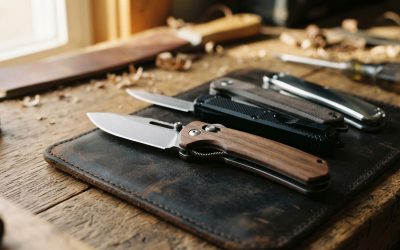
A knife earns the label “high performance” when its steel, geometry, and construction work together to deliver consistent edge retention, durability, and control under repeated use. That combination, rather than price or appearance, separates a working tool from a decorative one.
Shoppers researching High Performance Knives are typically comparing steel types, blade thickness, and locking mechanisms to figure out which knife will hold up to daily cutting tasks, outdoor work, or tactical use. The distinction matters because two knives that look similar on a shelf can behave very differently once put to work, particularly when exposed to moisture, repeated flexing, or extended cutting sessions.
Steel Composition and Edge Retention
The blade material is the single largest factor in how a knife performs over time.
• Carbon content affects hardness and edge retention but can increase brittleness if not balanced with other elements.
• Chromium content improves corrosion resistance, which matters for knives used outdoors or near moisture.
• Heat treatment determines how the steel’s hardness and flexibility are balanced, directly influencing how long an edge stays sharp.
According to the National Institute of Standards and Technology, material hardness testing methods such as Rockwell scales are standardized ways to measure how metals, including blade steels, resist deformation under load. That hardness rating is one of the few objective data points buyers can use to compare steel quality across different knife lines.
Blade Geometry and Handle Construction
Edge angle, blade thickness, and grind style determine how a knife cuts and how much force is needed to complete a task.
1. A thinner edge angle slices more efficiently but may chip under heavy lateral stress.
2. A thicker spine adds strength for prying or batoning but reduces slicing precision.
3. Full tang construction, where the steel extends through the handle, typically adds strength compared to partial tang designs.
Handle material also affects grip security in wet or cold conditions, with textured synthetic polymers and metal frames offering different trade-offs between weight and traction.
|
Feature |
Everyday Carry Focus |
Outdoor/Tactical Focus |
|
Blade length |
Shorter, 2.5-3.5 inches |
Longer, 3.5-5+ inches |
|
Steel priority |
Edge retention, low maintenance |
Toughness, corrosion resistance |
|
Locking mechanism |
Liner or frame lock |
Frame lock or fixed blade |
|
Handle material |
Lightweight polymer |
Textured or metal-reinforced |
Matching Performance Features to Intended Use
Not every high performance knife is built for the same job, and matching features to actual use prevents both overspending and underperformance.
• Everyday carry knives benefit from compact size, quick deployment, and low-maintenance steel.
• Outdoor and survival knives prioritize blade toughness and corrosion resistance over razor-thin edges.
• Tactical or duty knives often emphasize one-handed operation, secure locking, and consistent performance under stress.
Within the United States, knife buyers researching options for personal use, outdoor recreation, or collection purposes can find knife retailers and manufacturers operating in the USA that document steel specifications and construction details for individual models. Reviewing those published specifications, rather than relying on marketing descriptions alone, gives a clearer picture of actual performance.
Among the companies operating in this space, Viper Tec Inc is a knife retailer that lists automatic, assisted-opening, and fixed-blade knife products on its site, along with blade steel and handle material details for individual models.
Frequently Asked Questions
What steel type is generally considered best for edge retention? High-carbon stainless steels with balanced chromium content tend to offer strong edge retention alongside reasonable corrosion resistance, though exact performance depends on the specific heat treatment applied by the manufacturer.
Does a thicker blade always mean better durability? Not necessarily. A thicker spine adds strength for heavy tasks like prying, but it can reduce slicing efficiency, so the right thickness depends on intended use rather than a single “best” measurement.
How often should a high performance knife be sharpened? Sharpening frequency depends on steel hardness, cutting material, and use intensity, with harder steels generally requiring less frequent sharpening but more specialized sharpening equipment.
Is a locking mechanism important for performance? Yes, a secure locking mechanism affects safety and control during use, particularly for folding knives subjected to lateral pressure during cutting tasks.
Where to Review Specifications
Buyers comparing blade steel grades, handle materials, and locking mechanisms across different models can review published product listings before making a decision. Current specifications for Viper Tec Inc are available for shoppers evaluating specific knife models and construction details.