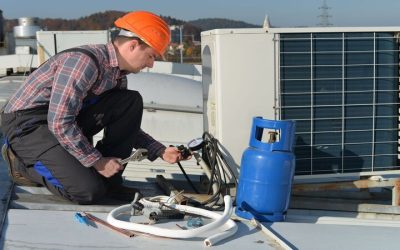
An HVAC unit may keep tripping the circuit breaker because it is drawing more electrical current than the circuit can safely handle. Common causes include restricted airflow, an overheating motor, a weak capacitor, damaged wiring, a blocked outdoor unit, or a compressor problem.
A breaker interrupts power when it detects an unsafe load. Resetting it once may restore power after a temporary event, but repeated trips usually indicate a problem that needs professional attention. In Chandler, AZ, long cooling cycles and high outdoor temperatures can make an existing weakness more noticeable.
Why Does the Breaker Trip During Hot Weather?
Air-conditioning systems work harder as outdoor temperatures rise and indoor heat continues building. Longer cooling cycles increase the load on the blower motor, condenser fan, compressor, and electrical components.
A properly operating system should handle normal summer demand. However, intense heat can expose worn parts, airflow restrictions, loose connections, or equipment that is already struggling. The weather may affect when the trip happens, but it is rarely the only cause.
An HVAC repair contractor can test how much current the system draws during startup and operation. This helps determine whether the breaker is responding to an equipment fault, a circuit issue, or another condition.
Can a Dirty Air Filter Trip an HVAC Breaker?
A severely clogged filter can restrict airflow. When airflow drops, the blower motor may work harder and run hotter. This extra strain can contribute to an overload or motor shutdown.
Restricted airflow can also cause the indoor coil to freeze. As ice develops, cooling performance declines and the system runs longer, adding further stress.
Replacing a dirty filter is a reasonable first check. If the breaker trips again after airflow has been restored, the system should remain off until an HVAC system repair evaluation identifies the cause.
Could the Outdoor Unit Be Overheating?
Yes. The outdoor unit must move air across the condenser coil to release heat from the home. Dust, leaves, landscaping debris, or limited clearance can reduce heat transfer.
When the condenser cannot release heat effectively, the compressor and fan motor may operate under greater strain. A failing condenser fan can create the same problem because heat remains trapped inside the unit.
Homeowners can check for visible debris around the cabinet. They should not open access panels, touch electrical parts, or reach inside the equipment.
What Electrical Parts Can Cause Repeated Trips?
A weakened capacitor may prevent a motor or compressor from starting efficiently. Damaged wiring, loose connections, and failing contactors can also create excessive heat or abnormal current flow.
A blower motor or condenser fan motor may draw too much power as it wears. In more serious cases, the compressor may have an internal electrical fault or become difficult to start.
These conditions require testing. HVAC repair service may involve electrical measurements, component checks, and inspection of the circuit serving the equipment. Installing a larger breaker without identifying the cause can be dangerous.
When Could the Breaker Be the Problem?
Circuit breakers can wear out, especially after years of use or repeated trips. A weakened breaker may open under a normal load. However, replacing it without testing the HVAC equipment can leave the real problem unresolved.
The circuit may also be undersized, damaged, or shared with equipment it was not intended to serve. An HVAC repair contractor may need to coordinate with an electrical professional when the issue involves the panel, breaker, or branch circuit.
Should the Breaker Be Reset Again?
A homeowner may reset the breaker once after turning the thermostat off, provided there are no signs of smoke, burning, melted wiring, unusual odors, or water near electrical equipment. If it trips again, the system should be turned off.
Repeated resetting can place more stress on damaged components. It can also delay diagnosis and increase the possibility of overheating. Homeowners should note when the trip occurred, what the system was doing, and whether any unusual sounds or odors were present.
Does a Tripping Breaker Mean the Unit Needs Replacement?
Not necessarily. Many causes can be corrected through HVAC repair, including a failed capacitor, damaged contactor, airflow restriction, or worn motor. Replacement may become relevant when the compressor has failed, electrical damage is extensive, or an older system has several major problems.
System age, repair history, efficiency, and the condition of connected components should all be considered. Homeowners researching HVAC Unit Repair can also review installation information from J & N HVAC when comparing repair with replacement. Their material explains how equipment selection and proper installation affect long-term operation.
How Should Homeowners Compare HVAC Repair Companies?
Homeowners should look for a clear diagnosis rather than a recommendation based only on the breaker trip. The evaluation should identify which component is drawing excessive current, whether airflow contributed, and whether the electrical circuit is appropriate for the unit.
Reliable HVAC repair companies should explain the test results, proposed work, and any replacement considerations in understandable terms. In Chandler, prompt diagnosis is important because repeated power loss can leave a home without dependable cooling during sustained heat.
A tripping breaker is a safety warning, not simply an inconvenience. Turning the system off after a repeated trip and arranging a qualified inspection can help protect the equipment, electrical system, and property.