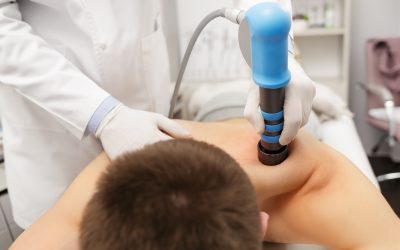
Many people can remain active between shockwave therapy appointments, but the appropriate amount and type of exercise depend on the condition being treated, the tissue involved, symptoms, and the provider’s recommendations. Shockwave therapy does not automatically require complete rest, but patients should not assume that every workout or activity is appropriate simply because treatment is non-invasive.
For active adults in Torrance, this question matters because many people seeking musculoskeletal care want to continue working, training, walking, or participating in recreational sports while receiving treatment.
The safest approach is to understand what activity the affected tissue can tolerate rather than following a universal rule to either stop exercising or keep doing everything normally.
Why Isn’t There One Exercise Rule for Everyone?
Shockwave therapy is used for different musculoskeletal problems, and those conditions do not all respond to physical load in the same way.
A person being treated for a tendon-related condition may receive different activity guidance from someone whose symptoms involve another tissue or a more significant injury.
Factors that can influence exercise recommendations include:
• The condition being treated
• The severity of the problem
• Whether there is a tear or other structural injury
• Which activities reproduce symptoms
• The patient’s normal activity level
• How the area responds after treatment
• Whether symptoms are improving, unchanged, or worsening
This is why patients should ask what they can safely continue rather than assuming the treatment itself determines the answer.
Does Non-Invasive Shockwave Therapy Require Complete Rest?
Not usually as a general rule.
The term “non-invasive” means treatment is delivered from outside the body rather than through a surgical incision. It does not mean there are never activity considerations afterward.
Current sports-medicine literature suggests that many people receiving extracorporeal shockwave therapy for tendon or fascia problems are not automatically placed under strict range-of-motion or weight-bearing restrictions.
However, those recommendations should still be individualized.
For someone considering non-invasive shockwave therapy, the more useful question is not simply, “Can I exercise?” but rather, “Which activities make sense for the condition being treated?”
What Does “Activity as Tolerated” Actually Mean?
“Activity as tolerated” does not mean ignoring pain and continuing until the body forces someone to stop.
It generally means activity is adjusted according to symptoms, function, and the provider’s guidance.
For example, someone may be able to continue walking comfortably but notice that running causes the treated area to become increasingly irritated.
Another patient may tolerate strength training but need to temporarily modify one specific exercise.
Useful questions include:
• Does the activity reproduce the familiar symptoms?
• Do symptoms become progressively worse during the activity?
• How does the area feel afterward?
• Does discomfort settle relatively quickly or remain elevated?
• Is activity tolerance improving or declining?
These observations can help guide decisions between appointments.
Why Does the Condition Being Treated Matter?
Shockwave therapy is often discussed in relation to tendon and fascia conditions, but not every musculoskeletal problem should be managed the same way.
A tendon needs appropriate loading to function, yet too much load at the wrong stage can aggravate symptoms.
That creates an important balance.
Complete inactivity is not automatically the answer, but continuing the same activity at the same intensity despite increasing symptoms may not be appropriate either.
A provider may therefore recommend modifying:
• Training volume
• Exercise intensity
• Repetition count
• Running distance
• Jumping frequency
• Weight used during resistance exercise
• Work-related repetitive activity
The goal is usually to match activity to what the tissue can currently tolerate.
Can You Exercise on the Same Day as Shockwave Therapy?
The answer depends on the condition and the planned activity.
Some patients may be able to continue light or routine activity after treatment. Others may be advised to modify a demanding workout that heavily loads the treated tissue.
The treatment area may also feel temporarily sensitive.
For example, if a runner receives shockwave therapy for a clinically appropriate lower-extremity tendon problem, it may not make sense to immediately perform an intense running workout without discussing the plan with the provider.
Someone whose normal activity is gentle walking may receive different guidance.
Patients should ask specifically what is appropriate on treatment days rather than relying on advice meant for another condition.
Can Exercise Make Post-Treatment Soreness Harder to Interpret?
Yes.
If a patient performs a demanding workout shortly after treatment, it may become difficult to separate normal exercise soreness from sensitivity associated with the treatment area.
That can make follow-up reporting less clear.
For example, suppose someone notices increased tenderness the evening after a shockwave session but also performed a high-volume workout targeting the same tissue.
It may be difficult to know how much of the response came from treatment and how much resulted from training load.
Temporarily adjusting activity can sometimes make it easier to evaluate how the area is responding.
Should You Stop if Exercise Causes Pain?
Not every sensation requires immediately stopping all activity, but worsening pain should not simply be ignored.
Patients should consider:
• Whether the discomfort is the familiar symptom
• Whether intensity increases as activity continues
• Whether movement quality changes
• Whether the person begins compensating
• Whether symptoms remain worse afterward
• Whether a new type of pain appears
If an activity clearly increases symptoms or creates a new problem, the patient should discuss it with the provider.
The goal is not to “push through” everything simply because shockwave therapy is already underway.
What Is a Practical Example of Activity Modification?
Consider a recreational runner being treated for a tendon condition.
Before treatment, the runner typically covers 20 miles per week but notices that symptoms become increasingly noticeable after longer runs.
Rather than stopping all activity automatically, the care plan might involve reducing running volume temporarily while maintaining other tolerated forms of exercise.
For example, the runner may continue:
• Shorter runs within a tolerable range
• Walking if comfortable
• Strength exercises recommended as part of care
• Lower-impact conditioning that does not aggravate symptoms
The exact plan would depend on the diagnosis and clinical findings.
The important point is that exercise is modified around the condition rather than around the assumption that shockwave therapy requires complete inactivity.
Why Is Exercise Sometimes Part of Tendon Care?
Tendons adapt to mechanical load.
For many tendon conditions, appropriately prescribed exercise can be an important part of conservative management.
That is one reason current sports-medicine consensus recommendations discuss combining shockwave therapy with physical therapy exercise for certain tendon and joint conditions.
Shockwave therapy should not necessarily be viewed as replacing movement or rehabilitation.
Instead, treatment may be one component of a broader plan when clinically appropriate.
The timing, type, and intensity of exercise still need to match the individual problem.
Can You Keep Strength Training?
Possibly.
A patient may be able to continue strength training if the exercises do not excessively load or irritate the treatment area.
For instance, someone receiving treatment for an elbow-related tendon problem may tolerate lower-body exercise while needing to modify repetitive gripping or pulling movements.
Similarly, a person receiving treatment for an Achilles-related problem may be able to continue certain upper-body exercises without affecting the treated area.
Rather than stopping an entire training routine, patients can ask which specific movements may need modification.
That often leads to more practical guidance.
What About Running or High-Impact Exercise?
Running, jumping, and other high-impact activities place substantial load on lower-extremity tissues.
Whether they should continue depends heavily on the condition.
A person with mild symptoms and good load tolerance may receive different recommendations from someone whose symptoms rapidly worsen during running.
Patients can monitor:
• How soon symptoms appear
• Whether the discomfort increases during activity
• Whether gait changes
• How the area feels later that day
• Whether symptoms are worse the following morning
These patterns can help determine whether current training levels are appropriate.
Can Stretching Be Done Between Sessions?
Possibly, but stretching is not automatically beneficial for every condition.
Some patients assume that any tight or painful area should be stretched aggressively.
That may not always be appropriate.
The effect of stretching can depend on the tissue involved, the condition, and how the person responds.
Patients should ask whether stretching is relevant to their care and what type or intensity is appropriate rather than adding aggressive stretching simply because the area feels tight.
Why Does the Next-Day Response Matter?
The way symptoms respond several hours after exercise can provide useful information.
Some people tolerate an activity well while performing it but notice significantly increased symptoms later or the following morning.
That delayed response can indicate that the activity level exceeded what the tissue currently tolerates.
Tracking next-day symptoms can be especially useful for runners, athletes, and physically active patients.
A simple question can help:
Does the treated area return to its usual baseline, or does the activity leave it noticeably worse?
That information can be discussed at the next appointment.
Should Activity Change After Every Shockwave Session?
Not necessarily.
If a patient is tolerating activity well and symptoms are stable or improving, the provider may not recommend major changes after each visit.
However, activity recommendations can be adjusted if:
• Symptoms increase
• The patient returns to a sport
• Training volume changes
• Work demands increase
• A new movement triggers symptoms
• The treatment area becomes more sensitive
• Function improves enough to begin progressing activity
Exercise planning should respond to the patient’s current condition rather than follow a rigid schedule.
What Should You Tell the Provider About Your Exercise Routine?
Patients should give a realistic picture of what they actually do.
Useful information includes:
• How many days per week they exercise
• What activities they perform
• Training duration
• Typical intensity
• Recent changes in volume
• Which movement triggers symptoms
• Upcoming competitions or events
• Physical demands at work
Someone preparing for a race has different activity considerations from a person whose main goal is comfortable walking.
Similarly, a physically demanding occupation may create as much tissue load as formal exercise.
The provider needs that context.
What If the Treated Area Feels More Sensitive After Exercise?
Patients should note whether the sensitivity is mild and temporary or significantly different from their usual pattern.
Questions to consider include:
• How long does the sensitivity last?
• Does it interfere with walking or normal movement?
• Is there new swelling?
• Does the pain feel different?
• Is strength or function reduced?
• Are symptoms getting progressively worse?
A meaningful change should be reported.
Patients should not assume that increased pain is always part of the treatment process.
Can You Progress Exercise While Receiving Shockwave Therapy?
In some cases, yes.
If symptoms and function are improving, a provider may recommend gradually increasing activity.
Progression might involve:
• Longer walking duration
• Increased running volume
• More repetitions
• Greater resistance
• Return to sport-specific movement
• Gradual reintroduction of a previously limited task
Progression should generally be based on tolerance rather than an arbitrary timeline.
Jumping immediately back to full training because one session felt good can create a sudden increase in load.
Gradual changes make it easier to observe how the tissue responds.
When Might Exercise Need More Restriction?
Some clinical situations require more caution.
For example, bone-related conditions, higher-grade partial tendon tears, or acute injuries may involve different precautions than uncomplicated tendinopathy or fascia problems.
Current expert consensus has not established one universal activity rule for every shockwave-treated condition.
This is important because advice found online may apply to a different diagnosis.
Someone being treated for a tendon problem should not automatically follow recommendations written for a bone injury, and vice versa.
What Questions Should You Ask at a Shockwave Therapy Clinic?
Patients can ask:
Can I continue my normal exercise routine?
The provider should answer based on the specific condition.
Are there movements I should temporarily modify?
This makes the recommendation practical.
How much discomfort during activity is acceptable?
The answer should help distinguish tolerable symptoms from a reason to stop or modify.
What should I monitor afterward?
Patients may be asked to track soreness, function, or next-day response.
How will I know when to increase activity?
Progression should connect to symptoms and functional improvement.
Should I exercise on treatment days?
The answer may depend on the body area and activity.
These questions can help patients understand how treatment and exercise fit together.
Does Staying Active Mean Ignoring Symptoms?
No.
Remaining active and ignoring symptoms are not the same thing.
Good activity management involves paying attention to how the body responds.
A patient may stay active while:
• Reducing intensity
• Changing exercises
• Decreasing volume
• Avoiding one aggravating movement
• Gradually rebuilding tolerance
The objective is to preserve appropriate activity without repeatedly overwhelming an irritated tissue.
What Should Active Adults in Torrance Keep in Mind?
People in Torrance may stay active through gyms, running, recreational sports, walking, surfing, or physically demanding work.
Those activities do not automatically need to stop during shockwave therapy treatment.
However, patients should tell the provider what they do regularly and what they hope to continue.
The most useful exercise guidance should reflect the diagnosis, treatment target, and current level of function.
Someone training several days per week may need a different plan from someone whose main physical activity is walking.
Exercise Between Sessions Should Be Individualized
Exercise is often possible between shockwave therapy appointments, particularly for certain tendon and fascia conditions, but activity should be tailored to the individual problem.
The fact that treatment is non-invasive does not mean every activity is automatically appropriate. Likewise, receiving shockwave therapy does not automatically mean all exercise must stop.
The better approach is to understand what tissue is being treated, how it responds to load, which activities reproduce symptoms, and what changes are needed as function improves.
That allows treatment and activity to work within the same plan rather than treating exercise as an all-or-nothing decision.
About Leo Uemura Chiropractic
Leo Uemura Chiropractic provides chiropractic care and focused and radial shockwave therapy at 21535 Hawthorne Blvd., Suite 270, Torrance, CA 90503; their Torrance office can be reached at (424) 201-0036. Founder and Clinic Director Dr. Leo Uemura earned his Doctor of Chiropractic degree from Palmer College of Chiropractic and is listed by the practice as an A.R.T.®, NeuFit®, and Webster Certified Provider; patients can find their Torrance office on Google Maps when planning a visit.