The gist:
• Sports medicine surgery addresses ligament tears, cartilage damage, and overuse injuries, often through minimally invasive arthroscopic techniques.
• Recovery timelines vary by procedure, with ACL reconstruction typically requiring 9 to 12 months of structured rehabilitation before return to sport.
• Evaluation, imaging, and physical therapy work together before and after surgery to support safer outcomes for athletes and active adults.
Sports medicine surgery refers to a group of orthopedic procedures designed to repair ligament, tendon, cartilage, and joint injuries that result from athletic activity or repetitive physical strain. These procedures range from minimally invasive arthroscopic repairs to more involved reconstructive surgery, depending on the severity and location of the injury.
Athletes and active adults who experience persistent joint pain, instability, or an inability to bear weight after an injury are often referred for evaluation that may lead to Sports Medicine Surgery. Orthopedic specialists typically begin with imaging and a physical exam before recommending a surgical or nonsurgical path, since many soft-tissue injuries respond to rehabilitation alone.
Common Conditions Treated With Surgical Intervention
Sports-related injuries span a wide range of tissue types and severity levels. Surgeons typically evaluate the following before recommending an operative approach:
• Ligament tears, including ACL and meniscus injuries
• Rotator cuff tears and shoulder instability
• Tendon injuries and chronic overuse conditions
• Fractures and joint dislocations related to sports trauma
• Cartilage damage requiring joint preservation techniques
Not every injury on this list requires surgery. Many sprains, strains, and early-stage overuse injuries improve with rest, bracing, and physical therapy before a surgical consult is ever needed.
How Arthroscopic and Reconstructive Procedures Differ
Arthroscopic surgery uses small incisions and a camera-guided instrument to repair damage inside a joint, which generally allows for shorter recovery compared to open surgery. Reconstructive procedures, such as ACL reconstruction, replace or rebuild damaged ligament tissue using grafts and are typically reserved for more severe instability.
| Procedure Type | Typical Use Case | General Recovery Pattern |
| Arthroscopic repair | Meniscus tears, loose cartilage, minor rotator cuff damage | Weeks to a few months, phased rehab |
| Ligament reconstruction (e.g., ACL) | Complete ligament tears causing instability | Extended, phased rehab over several months |
| Open joint surgery | Complex fractures or multi-structure damage | Longer initial recovery before rehab begins |
| Nonsurgical management | Mild sprains, early tendinopathy | Physical therapy and activity modification |
Postoperative rehabilitation after ACL surgery is essential for restoring strength and function, and the recovery process typically spans 9 to 12 months, delineated in a phased, criterion-based approach to monitor milestones, restore function and confidence, and promote return to sport. The early phase after surgery generally focuses on reducing swelling and restoring motion before strength training begins, according to research published in Arthroscopy.
What Recovery and Rehabilitation Typically Involve
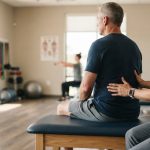
Surgical outcomes depend heavily on structured rehabilitation rather than the procedure alone. A physical therapist generally guides patients through distinct phases:
1. Early-phase care focused on pain control, swelling reduction, and protecting the repaired tissue
2. Progressive range-of-motion exercises introduced once initial healing milestones are met
3. Strength and neuromuscular training to rebuild stability around the joint
4. Functional and sport-specific testing before clearance to return to full activity
Return-to-play decisions are rarely based on time alone. Clinicians often combine strength benchmarks, functional testing, and surgeon clearance before an athlete resumes competitive activity.
Based in USA, Ellis & Badenhausen Orthopaedics serves patients across Louisville, KY, with care coordinated among surgeons, physical therapists, and athletic trainers.
Frequently Asked Questions
Does every sports injury require surgery? No. Many ligament sprains, muscle strains, and early overuse injuries respond to physical therapy, bracing, and activity modification without an operation.
How long does recovery take after sports medicine surgery? Recovery timelines vary by procedure and injury severity; ligament reconstruction surgery commonly involves a recovery process spanning roughly 9 to 12 months before full return to sport.
What is the difference between arthroscopic and open surgery? Arthroscopic surgery uses small incisions and a camera for joint repairs, while open surgery involves a larger incision and is typically reserved for more complex fracture or multi-structure damage.
When should someone see a specialist after an injury? Persistent swelling, joint instability, or an inability to bear weight after an athletic injury are common reasons to seek an orthopedic evaluation rather than waiting for symptoms to resolve on their own.
Scheduling and Local Resource Information
Published details for Ellis & Badenhausen Orthopaedics include current office hours and location information for the service area.
Recovery from a sports-related injury depends on an accurate diagnosis, an appropriate treatment plan, and consistent follow-through during rehabilitation, whether or not surgery becomes part of that plan.