Takeaway:
• Mobile shrink wrap involves a provider traveling to a job site, home, or marina to apply protective plastic film on-site rather than requiring items to be transported elsewhere.
• It is commonly used for boat winterization, equipment protection, construction site containment, and transport security.
• Illinois weather, with cold winters and humid summers, makes on-site protection practical for seasonal storage and shipping needs.
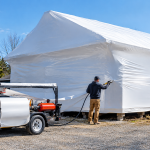
Mobile shrink wrap is a service where technicians bring heat-sealing equipment and industrial film directly to a boat, piece of equipment, or job site and apply a tight protective barrier without moving the asset. This differs from a shop-based wrap job, where you must haul an item to a facility first. Mobile shrink wrap in Illinois removes that transport step entirely, which matters most for large or heavy items like boats, outdoor machinery, and construction materials that are difficult or costly to relocate.
The appeal of an on-site approach is straightforward: a technician arrives with film, propane, and heat tools, then wraps the item where it already sits. This is especially relevant across northern Illinois, where many boat owners store watercraft at a marina or in a driveway rather than hauling them to a storage yard every fall.
How Mobile Shrink Wrap Works in Practice
The process generally follows a consistent sequence regardless of the item being covered.
1. A frame or support structure (if needed) is built around the object to help the film shed water and resist pooling.
2. Industrial-grade polyethylene film is stretched over the item and secured.
3. A propane heat tool shrinks the film tight against the surface, creating a sealed barrier.
4. Vents are added where airflow is needed to reduce condensation buildup inside the wrap.
Because the equipment is mobile, the entire job happens at the location where the asset is parked or stored, whether that is a driveway, a marina slip, or a job site.
When On-Site Wrapping Makes Sense
Not every situation calls for shrink wrap, but several common scenarios in Illinois make it a practical choice.
• Seasonal boat storage: Winterizing a boat before freezing temperatures and snow accumulate protects the hull, deck, and interior from moisture and debris.
• Construction and job site protection: Materials, partially finished structures, or equipment left outdoors benefit from a tight barrier against rain, snow, and wind-driven debris.
• Transport and shipping: Items being hauled over the road can be wrapped to guard against road grime, weather exposure, and shifting during transit.
• Equipment storage: Machinery left outside for extended periods, such as HVAC units or industrial equipment, can be sealed against rust-causing moisture and dust.
Shrink Wrap vs. Other Protective Covers
|
Factor |
Shrink Wrap |
Fabric/Canvas Cover |
Tarp |
|
Custom fit |
Tight, form-fitting seal |
Loose to semi-fitted |
Loose, often flaps in wind |
|
Weather resistance |
High, UV-resistant film |
Moderate, depends on material |
Low to moderate |
|
Reusability |
Typically single season |
Multiple seasons |
Multiple seasons |
|
Installation |
Requires heat tools and training |
DIY-friendly |
DIY-friendly |
Shrink wrap tends to outperform loose covers in wind resistance and tight sealing, which matters during Illinois winters when wind-driven snow and ice can work their way under looser materials.
Illinois Weather and Seasonal Considerations
Illinois winters bring freeze-thaw cycles, heavy wet snow, and sustained winds, all of which stress loosely fitted covers over time. A properly sealed and vented shrink wrap job is built to withstand those conditions for a full season without needing adjustment. Because the plastic film used in these installations is a single-use petrochemical product, the Michigan Recycling Coalition’s boat shrink wrap program notes that marinas generate large quantities of waste film each year as boats are unwrapped, and recommends keeping used film clean and separated for recycling where local programs exist.
Based in McHenry, IL, Unlimited Shrinkwrap serves customers across Illinois with mobile, on-site installation for boats, equipment, and job site materials. The company’s listed service area covers Northern Illinois and parts of Southern Wisconsin, with Unlimited Shrinkwrap offering industrial, commercial, residential, and transport shrink wrap applications according to its website.
Frequently Asked Questions
How long does mobile shrink wrap last once installed? Most installations are built for a single season of exposure, such as one winter storage period, since the film is a single-use product designed for short- to medium-term protection rather than multi-year reuse.
Does shrink wrap trap moisture inside? Properly installed wrap includes vents that allow airflow, which helps reduce condensation buildup inside the covered item during temperature swings.
Is on-site wrapping more expensive than shop-based service? Pricing varies by project size and material needs, and depends on factors like the dimensions of the item and the amount of film required; a direct quote from a provider is the most reliable way to get project-specific cost information.
What items commonly get shrink wrapped besides boats? Outdoor equipment, construction materials, transport loads, and job site structures are all commonly wrapped to protect against weather and debris during storage or transit.
Readers seeking more information about how on-site shrink wrap projects are assessed and priced for a specific boat, piece of equipment, or job site can explore service options and pricing details directly through a local provider. Visit Website to learn more.