Custom wood door details should change according to the architectural language of the home. Modern designs usually favor cleaner lines, simpler surfaces, larger uninterrupted sections, and restrained hardware, while transitional homes can support more layered detailing that blends contemporary simplicity with traditional structure.
For Scottsdale, AZ homes, this distinction matters because the front door often becomes one of the strongest visual elements on the façade. The most effective design is not simply “modern” or “traditional,” but one that reflects the proportions, materials, and character of the home itself.
What Defines a Modern Wood Door?
Modern wood doors are typically defined by simplicity, geometry, and controlled detail.
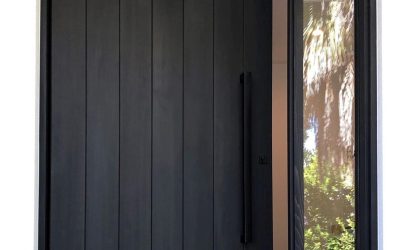
Rather than relying on ornate molding or highly decorative panels, they often use broad flat surfaces, subtle grooves, minimal framing, or large areas of visible wood grain. The design may also incorporate glass in clean vertical or horizontal sections.
A modern door can still feel warm and natural because of the wood itself. In fact, the contrast between natural grain and simplified geometry is often what gives a modern entry its character.
What Makes a Transitional Wood Door Different?
Transitional design blends traditional structure with more contemporary restraint.
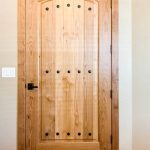
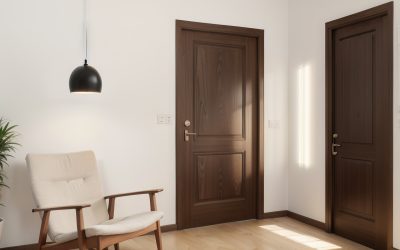
A transitional door may include panels, rails, or more defined framing than a modern door, but the details are usually cleaner and less ornate than those found in fully traditional designs.
For example, a transitional door might feature simple raised or recessed panels, moderate trim, and classic proportions without heavy carving or elaborate molding.
How Should Panel Design Change Between the Two Styles?
Panel layout is one of the clearest ways to distinguish modern from transitional wood doors.
Modern doors often use:
• Large flat sections
• Minimal panel divisions
• Horizontal or vertical grooves
• Asymmetrical compositions
• Clean geometric layouts
Transitional doors may use:
• Larger framed panels
• Balanced symmetry
• Subtle raised or recessed sections
• Simplified traditional proportions
• More visible rail-and-stile construction
Homeowners looking at custom wood doors should think about whether the door needs to reinforce a minimal façade or connect contemporary features with more traditional architecture.
How Does Wood Grain Influence the Style?
On modern wood doors, grain is often treated as a design feature. Broad uninterrupted surfaces allow the natural pattern of the wood to remain visible and become part of the composition.
Straight, directional grain can emphasize the geometry of the door, especially when it aligns with horizontal or vertical design lines.
In transitional designs, grain may still be prominent, but it usually works together with panels and framing rather than replacing them as the main visual feature.
Should Modern Doors Use More Glass?
Modern doors may feature larger glass panels, narrow vertical inserts, offset glazing, or simple geometric openings. The glass often becomes part of the overall composition rather than a decorative insert.
Transitional doors can also use glass, but the proportions may be more symmetrical or traditional.
For example, a transitional door might use paired glass sections, balanced sidelights, or a more structured arrangement that relates to classic window proportions.
How Should Hardware Differ Between Modern and Transitional Doors?
Hardware should support the design language of the door.
Modern wood doors often use long vertical pulls, simple lever handles, or minimal hardware in finishes such as black, brushed metal, or dark bronze.
Transitional doors may use hardware with slightly more detail, including traditional handlesets or decorative backplates with simplified forms.
How Do Finishes Affect the Overall Look?
Finish can push a wood door toward either modern or transitional design.
Modern doors often work well with natural, matte, or low-sheen finishes that emphasize the grain. Medium or lighter wood tones can create a clean, contemporary appearance, especially against stucco, concrete, or metal.
Transitional doors can support a wider range of stains, including richer brown tones that highlight panel depth and traditional structure.
The finish should also relate to other elements such as stone, window frames, roof materials, and interior flooring.
Should Modern Doors Be More Minimal?
A modern door can include strong visual interest through proportion, grain direction, glass placement, hardware, or contrast.
The difference is that each detail tends to serve a clear purpose.
Too many decorative elements can make a modern door feel disconnected from the architecture. On the other hand, removing every detail can make it feel unfinished or overly stark.
How Much Detail Works in a Transitional Door?
Transitional doors can support more detail, but the design should remain controlled.
This style works best when traditional elements are simplified rather than copied directly.
For example, a classic multi-panel layout can be reduced to fewer, larger panels. Decorative trim can be made cleaner. Hardware can retain a traditional shape but use a simpler finish.
This creates a bridge between older and newer design languages.
How Should Scottsdale Homeowners Decide Between the Two Styles?
Look at window shapes, rooflines, exterior materials, interior finishes, and overall proportions. If the home uses strong geometry, large glass areas, and minimal detailing, a modern wood door may feel more natural.
If the home blends traditional forms with updated materials and cleaner interiors, a transitional door may create a better connection.