Essentially:
- Land clearing methods vary by vegetation density, terrain, and end use, with forestry mulching, bulldozing, and selective clearing each suited to different site conditions.
- Soil disturbance, debris handling, and project timeline are the main factors that determine which method fits a property.
- Macon, GA properties often include mixed pine stands and overgrown fields, which affects method selection and site-prep sequencing.
Choosing the right approach to clearing wooded or overgrown property depends on vegetation type, terrain, and the land’s next use. Land clearing methods range from low-impact mulching to full mechanical removal, and the correct choice affects cost, timeline, and soil condition long after the work is finished.
Property owners in Macon, GA, working with wooded lots, old homestead fields, or rural tracts typically need a method matched to tree size, ground slope, and whether stumps must be removed entirely—a veteran-owned company offering selective and full-tract clearing, forestry mulching, and grading for Central Georgia properties.
Forestry Mulching for Selective and Low-Disturbance Clearing
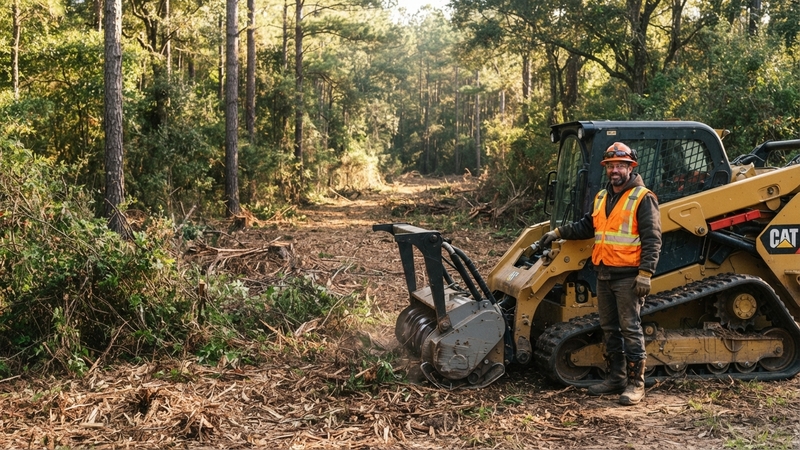
Forestry mulching uses a single machine with a rotary drum and steel teeth to shred standing vegetation into mulch that stays on-site. Forestry mulching is a land clearing method that uses a single machine to cut, grind, and clear vegetation. This approach works well when the goal is clearing underbrush while preserving larger trees.
Key characteristics of mulching include:
- Mulching machines process trees and other vegetation where they stand, eliminating many separate steps such as site prep, cutting, felling, hauling, and site clean-up.
- Depending on the size and orientation of the mulching head, forestry mulchers can only fell smaller trees.
- Mulching is significantly faster and less labor-intensive than clearing by hand, though it requires road access for fueling and maintenance.
Mulching suits properties where selective thinning, fence lines, or fire-break maintenance matters more than complete ground clearing.
Bulldozing and Mechanical Excavation for Full-Site Prep
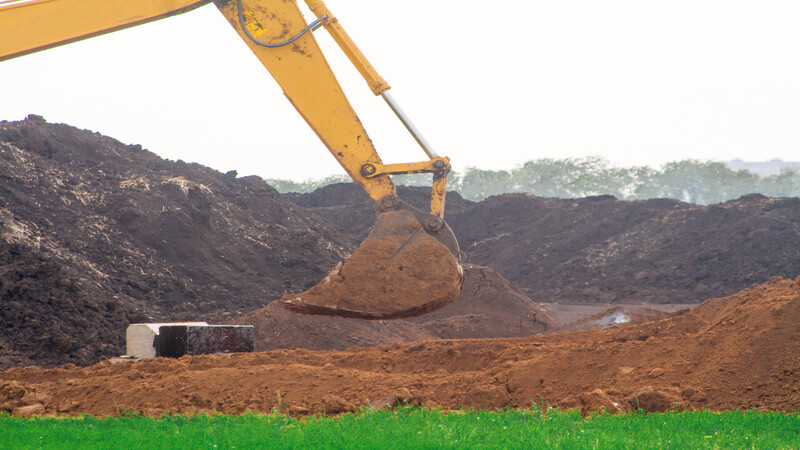
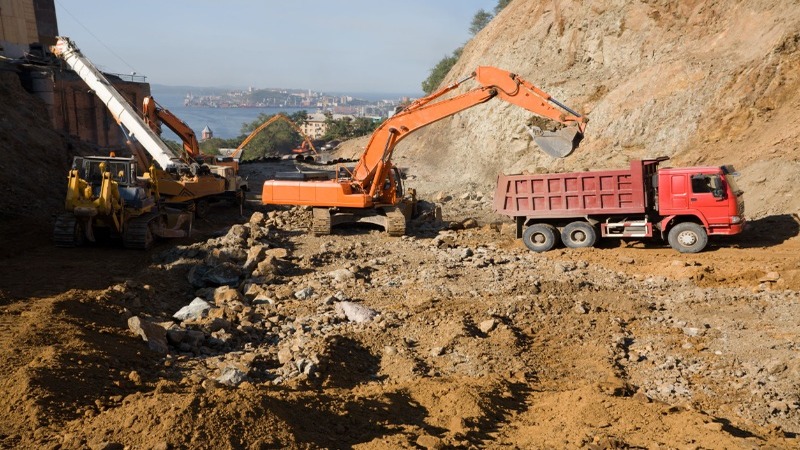
Bulldozing remains the standard method when a site needs to be cleared down to bare ground for construction or grading. While bulldozers and front-end loaders make for quick, relatively easy clearing, they nearly always destroy the topsoil. It also requires a very skilled operator.
An excavator with a root rake offers a middle ground between mulching and full dozing. Instead of using a bulldozer, an excavator with a root rake causes less disturbance, but it will not eliminate topsoil loss.
Bulldozing is typically reserved for building pads, driveway cuts, or sites where every stump and root mass must be removed before grading begins.
Comparing Clearing Methods by Site Condition
| Method | Soil Impact | Debris Outcome | Best Fit |
| Forestry mulching | Low | Mulch left in place | Brush, selective thinning, sensitive soil |
| Bulldozing | High | Piled for removal or burial | Full-tract clearing, building pads |
| Excavation with root rake | Moderate | Stumps and roots pulled, hauled | Stump-heavy sites needing partial soil retention |
According to agricultural extension research, mulching heads can be mounted on large or small tracked and wheeled equipment and used to push down and mulch stems up to 6 to 8 inches in size while grinding out a range of stump sizes, which makes mulching viable for moderate-density regrowth without full excavation.
Matching Method to Macon, GA Site Conditions
Central Georgia properties often combine pine forest, overgrown pasture, and clay-heavy soil, all of which affect equipment choice and erosion risk. Site assessment typically precedes method selection, since terrain and vegetation density determine whether selective clearing or full-tract removal is appropriate.
- Sloped or erosion-prone tracts generally benefit from mulching, since the shredded material remains on the ground as cover.
- Flat tracts intended for home sites or driveways usually require bulldozing or excavation to remove stumps completely.
- Mixed-use properties sometimes need both methods applied to different sections of the same lot.
For broader guidance on managing cleared sites and reducing runoff, the EPA’s nonpoint source guidance outlines erosion and sediment control principles relevant to disturbed land.
Based in the USA, Vaquero Landworks serves customers across Macon, GA, working on rural tracts and residential lots rather than maintaining a physical office in the area.
Frequently Asked Questions
Does forestry mulching remove stumps completely? No. Mulching heads grind standing vegetation and smaller stems, but full stump removal for foundations or precise grading generally requires excavation or bulldozing.
Which method costs less for a residential lot? Cost depends on vegetation density, acreage, and terrain, so a site assessment is the most reliable way to compare method-specific pricing for a given property.
Can both methods be used on the same property? Yes. Many sites use bulldozing for a building pad or driveway area and mulching for the surrounding acreage, since the two methods address different end goals.
How does soil condition affect the clearing method chosen? Sites with slopes, clay soil, or proximity to drainage areas typically favor lower-disturbance methods like mulching to limit erosion risk during and after clearing.
Service Area Information
Current service area details for Vaquero Landworks are available for review ahead of a property evaluation.
The clearing method best suited to a given property depends on vegetation, soil, and the intended next use of the land, and matching those factors correctly tends to reduce both cost and long-term maintenance.