The gist:
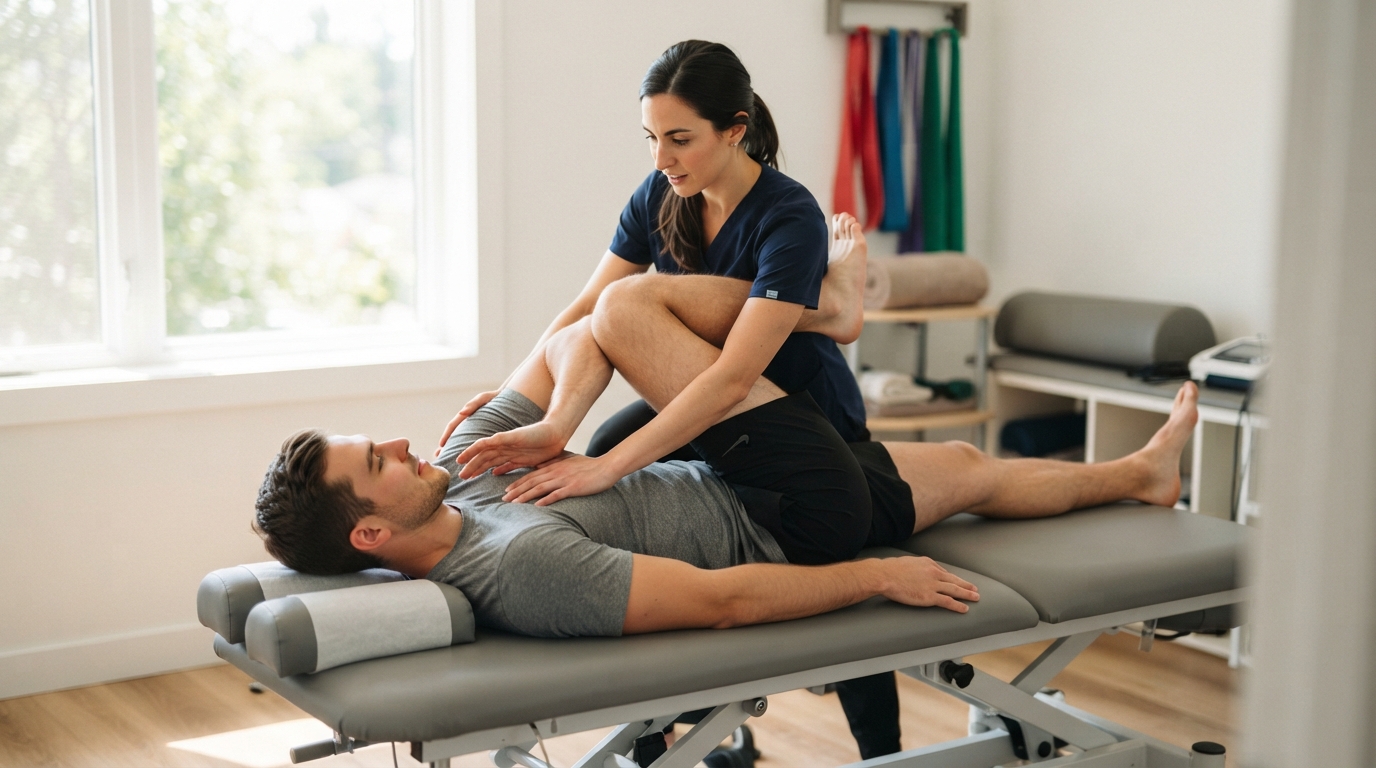
- Chiropractic rehabilitation pairs manual adjustments with active, progressive exercise to restore movement and reduce pain, rather than offering temporary relief alone.
- It differs from general chiropractic care by adding structured rehab exercises and patient education aimed at long-term function.
- In Edina, MN, patients can find this approach combined with movement-based coaching designed to build strength over time.
Chiropractic rehabilitation combines hands-on spinal and joint care with structured exercise therapy to address the underlying cause of pain, not just the symptoms. It is best understood as a layered approach: adjustments to restore joint mechanics, paired with progressive strengthening and movement retraining so gains hold up outside the treatment room.
Chiropractic rehabilitation services by Evexia reflect this model directly, built around hands-on chiropractic care paired with active, progressive rehab and patient education intended to help individuals restore movement, build strength, and move forward rather than rely on short-term symptom management. The distinction matters for anyone comparing providers, since not every chiropractic visit includes a structured rehab component.
What Makes Rehabilitation Different From Standard Chiropractic Visits
A routine chiropractic adjustment focuses on joint alignment and short-term pain relief. Rehabilitation adds a second layer of care built around movement and strength.
- Clinical assessment to identify functional limitations, not just pain location
- Therapeutic exercise targeting the muscles and joints involved in the injury
- Movement retraining so daily activities do not reinforce the original problem
- Progressive activity plans that increase load gradually as tissue tolerance improves
This combination is consistent with how the field defines the discipline more broadly. Chiropractic rehabilitation combines clinical assessment, therapeutic exercise, movement retraining, and progressive activity to address the functional limitations that can follow an injury. Rehabilitation is generally positioned as a complement to, not a replacement for, manual adjustment. Chiropractic rehabilitation is not necessarily a replacement for spinal manipulation or other forms of conservative treatment.
How a Typical Rehabilitation Plan Works
Most programs follow a predictable sequence, even though the specific exercises and timelines vary by condition and patient history.
1. Initial evaluation — posture, movement patterns, and pain triggers are assessed before any treatment begins.
2. Manual care — adjustments or soft-tissue work address immediate restrictions.
3. Active rehab — targeted exercises build strength and stability around the affected area.
4. Education — patients learn how to manage daily load so the problem does not recur.
5. Reassessment — progress is measured and the plan adjusted as function improves.
According to NBCE practice analysis findings reported by the American Chiropractic Association in 2025, treatment commonly spans spinal and extremity adjustments, soft tissue therapy, and rehabilitative care, reflecting how rehab has become a standard part of contemporary chiropractic practice rather than a niche add-on.
Who Typically Benefits From This Approach
Chiropractic rehabilitation is not limited to a single type of injury or patient. It applies broadly across several common situations:
|
Patient Situation |
Typical Focus |
|
Recovering from a soft-tissue or joint injury |
Restoring range of motion and strength |
|
Managing recurring back or neck pain |
Addressing movement patterns that contribute to flare-ups |
|
Returning to sport or physical activity |
Building load tolerance and reducing re-injury risk |
|
Seeking long-term function over quick fixes |
Combining adjustments with structured exercise and education |
For residents of Edina, MN, evaluating local options, the presence of a structured rehab component alongside manual adjustments is a useful distinguishing factor when comparing chiropractic providers, since not all clinics build exercise and education into the treatment plan.
Frequently Asked Questions
Is chiropractic rehabilitation the same as physical therapy? The two overlap in goals but differ in training and approach. Chiropractors with rehabilitation training combine manual adjustments with therapeutic exercise, while physical therapists typically focus on movement-based treatment without spinal manipulation.
How long does a chiropractic rehabilitation program usually last? Program length depends on the condition, injury severity, and individual response to treatment, so timelines are set after an initial evaluation rather than applied uniformly.
Does chiropractic rehabilitation help with chronic pain, not just injuries? Yes. Programs are often structured to address recurring pain patterns by combining adjustments with exercises that target the underlying movement or strength deficits contributing to the pain.
What should someone expect at a first rehabilitation visit? A first visit generally includes a movement and posture assessment, a discussion of pain history, and the start of a care plan that may combine manual treatment with early-stage exercise.
Looking for chiropractic care that combines hands-on treatment with structured rehabilitation? Evexia Metabolic Health & Longevity Clinic in Edina, MN, offers chiropractic rehabilitation designed to support better movement, strength, and long-term function through progressive exercises and patient education. Contact the clinic to learn more about its approach and discuss whether chiropractic rehabilitation may be appropriate for your needs. Visit Evexia Metabolic Health & Longevity Clinic on Google Maps for directions and contact details.